


Spider Silk Development: A Greener Alternative to Petroleum-Based Fibers

Plastics are everywhere. From clothes to outdoor equipment to industrial products.
But what's the price?
Microplastic pollution increases. Sustainable materials are needed more and more. Where will the industries go then?
The Hidden Challenge Behind Traditional Fibers
High-performance fibers rely heavily on petroleum resources. While these materials can be tough and diverse, their production usually involves energy costs. Not to mention about the long-lasting damage to the environment.
Finding a way out of this problem is no longer a question of tomorrow but rather a necessity.
This need has made Spider Silk Development stand out.

Nature's Blueprint, Reimagined
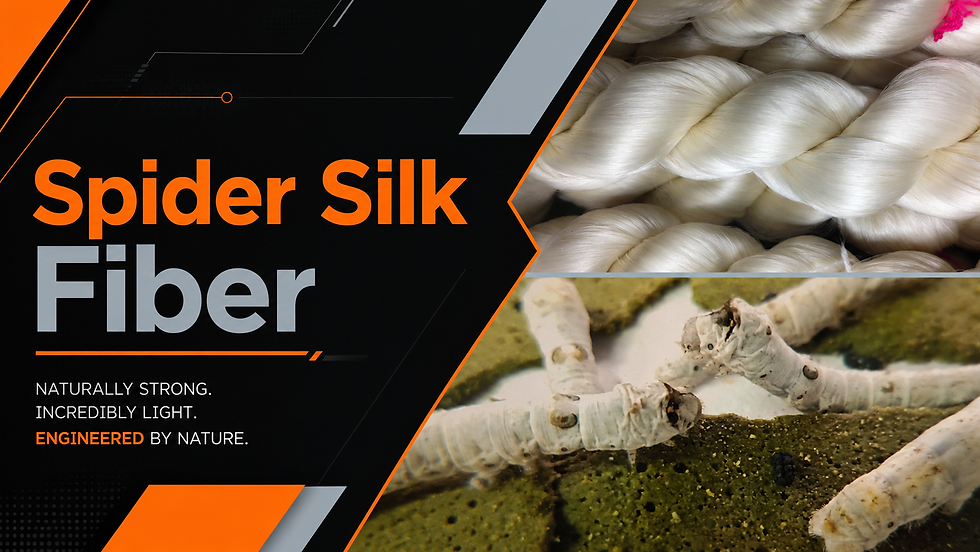
Think about a fiber based on one of the strongest and lightest natural materials known to humanity. This material is Spider Silk.
Spider Silk Development utilizes innovative biotech techniques and materials research to develop environmentally friendly materials capable of replacing current synthetic products. Using renewable biological systems, experts aim to create scalable ways of production while preserving the best features of Spider Silk.
A huge progress!
Why Industries Are Paying Attention
Advantages of Spider Silk Development exist in many fields:
Helps the move towards more sustainable materials
Decreases dependency on fibers made from petroleum
Has amazing properties of strength and weight
Creates new possibilities in terms of technical textiles
Spawns innovation in biomaterials field
And there are many others that may be discovered soon.
Looking Ahead
Innovation in the field of materials has entered a whole new dimension. Companies are now striving for the materials that combine durability, performance and sustainability in one bundle.
The development of spider silk shows more than just an achievement in science; it demonstrates a desire to optimize resource usage and embrace new, innovative ways of manufacturing high-performing materials.
The future innovation of sustainable manufacturing may be found in nature-inspired technologies.


Comments