


Spider Silk Fiber Explained: The Science Behind Nature’s Strongest Thread

A biomaterial that can rival the strength of steel while still being lighter than cotton fabric is becoming more than a mystery of nature. Spider silk fiber is now at the cutting edge of advanced biomaterial research, challenging all assumptions about what a high-performance fiber should be like.
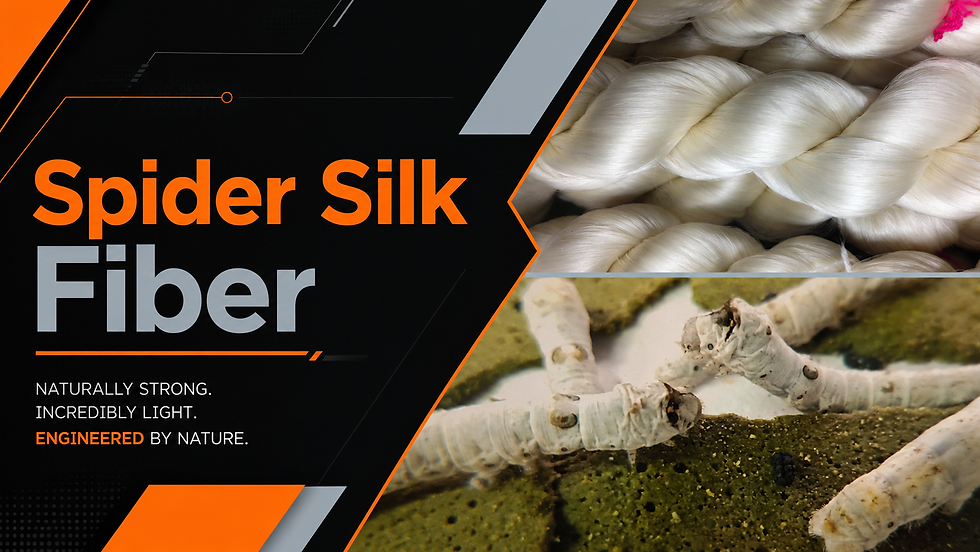
The Science Behind Spider Silk Fiber
As the name suggests, spider silk fiber is a protein-based biomaterial that forms from amino acid chains. These chains form in a way that creates crystalline and amorphous regions within the fiber.
Some of the important scientific features of this material are:
High tensile strength in proportion to its weight
Flexible enough for high levels of elasticity
Resistance to damage from the environment
Inspiration for synthetic biomaterials
One of the most exciting things about spider silk fiber is that scientists can replicate and modify the protein-based structure for a biomimetic purpose.
Why It Matters in Material Innovation
Spider silk fiber goes far beyond being a fascinating biological specimen. It represents a paradigm shift in how industries approach next-generation material systems. Instead of relying on petroleum-based artificial alternatives, researchers are increasingly interested in high-performing, protein-based material systems.
It has the following advantages over traditional artificial fibers:
Greater strength-to-weight ratio
Enhanced biocompatibility in specific applications
Environmental benefits due to its biodegradability properties
Applications Driving Real-World Demand
The demand for spider silk fiber is continuously growing in different sectors:
For biomedical engineering purposes, such as stitches and tissue structures
Textiles that need lightweight but durable fibers
Materials that require high levels of protection due to their ability to resist impact
Formulation through specialized material science studies
These applications benefit from the properties of the spider silk fiber, which include strength, elasticity, and biocompatibility.
A Material Built for the Future
The spider silk fiber constantly breaks new ground in biomaterials engineering. The fiber provides an inspiration for new developments in the industry, especially for companies looking for biomaterials with superior strength, weight, and flexibility.
With continuing studies on the fiber, the emphasis is now on mass production and practical applications. For any company researching biomaterials, more detailed information and specifications are available.


Comments